Wondering whether a condo or townhome is the smarter move in Albuquerque or Rio Rancho? You are not alone. Many buyers want a home that feels more manageable, more affordable, or simply better matched to the way they live now. The good news is that attached homes can offer strong value in both markets if you know what to compare before you buy. Let’s dive in.
Why attached homes stand out
If you are comparing housing options in Albuquerque or Rio Rancho, attached homes deserve a close look. They often offer a lower entry price than detached houses, along with a lifestyle that can feel simpler and more flexible.
In Albuquerque, the January 2026 GAAR and SWMLS report showed a median sales price of $260,000 for single-family attached homes. That was well below the $369,000 median for detached homes. For many buyers, that price gap is the first reason condos and townhomes make the shortlist.
Rio Rancho also offers attached-home options, though in a smaller supply. That smaller inventory can shape your experience as a buyer because fewer choices often mean you need to move faster when the right property hits the market.
Condo vs townhome basics
What a condo usually means
A condo usually means you own your individual unit and share ownership of common areas and amenities with other owners in the community. Those shared spaces may include parking areas, building exteriors, pools, clubhouses, or landscaped grounds.
That structure often comes with more association involvement in day-to-day upkeep. If you want less exterior maintenance on your plate, a condo may feel appealing.
What a townhome usually means
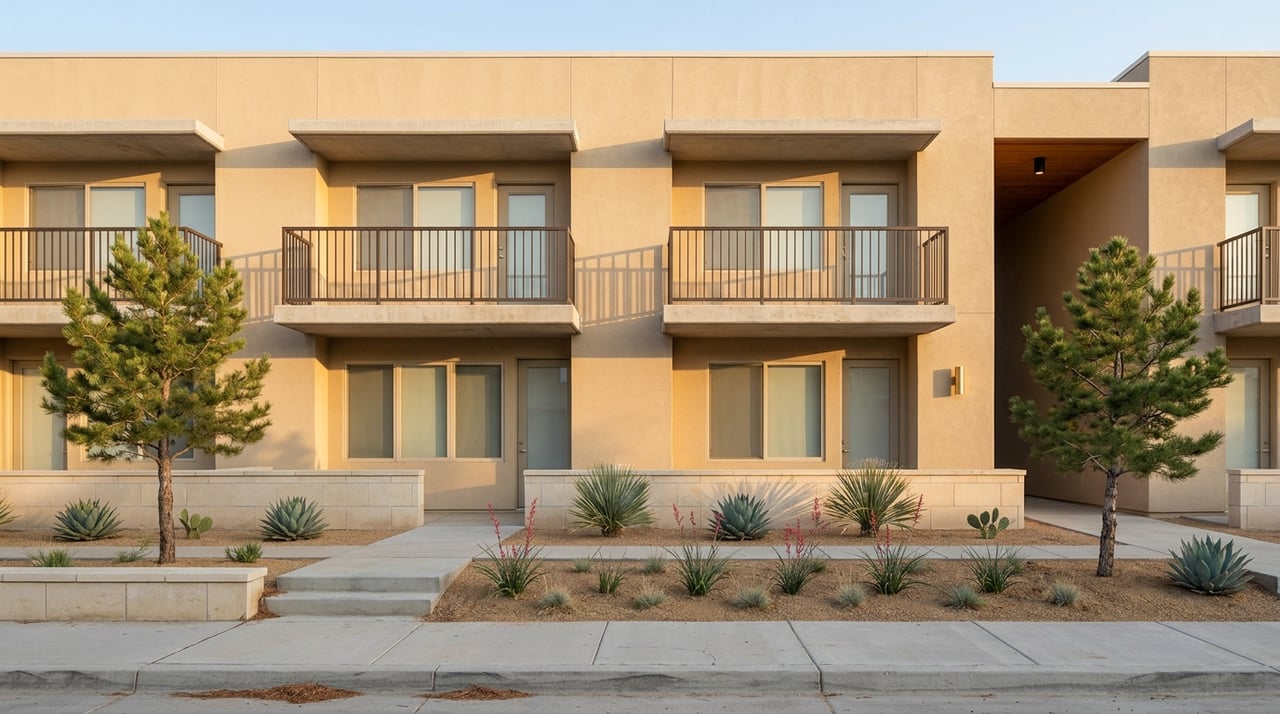
A townhome is typically an attached multi-level home with a private entrance. Many also include features like a private patio, balcony, or small outdoor area that make the property feel more like a traditional house.
One important detail is that townhome describes a style, not an ownership structure. The legal setup still needs to be confirmed, because two similar-looking townhomes may have different rules, responsibilities, and association documents.
The real difference for buyers
For most buyers, the biggest difference is maintenance. Condo associations often handle more exterior and shared-space upkeep, while townhome HOAs can vary more widely in what they cover.
That is why the monthly cost matters just as much as the purchase price. You want to look at the full picture: mortgage, taxes, insurance, and HOA dues.
Albuquerque prices and inventory
Albuquerque gives you the deeper attached-home market of the two cities. That larger pool can create more flexibility if you want to compare price points, layouts, finish levels, and HOA structures.
Current market snapshots show 94 condos in Albuquerque with a median listing price of $215,000. Townhouses show 68 listings with a median listing price of $340,000.
The range is also wide. Current listing examples show Albuquerque condos from the low $70,000s into the mid $300,000s, while townhomes run from roughly the low $250,000s into the high $300,000s.
That variety matters. It means you can often compare entry-level options, upgraded units, and more house-like townhome layouts within the same broader market.
Rio Rancho prices and inventory
Rio Rancho has a much smaller attached-home inventory. If you are shopping there, the narrower selection can make timing more important.
Current market snapshots show 8 condos in Rio Rancho with a median listing price of $188,000. Townhouses show 15 listings with a median listing price of $330,000.
Listing examples suggest Rio Rancho condos often cluster between about $145,000 and $205,000. Townhome examples range from about $234,000 to $420,000.
That thinner supply does not mean fewer good options. It simply means you may have fewer communities to compare, and a well-priced property in a well-run HOA may attract quick interest.
What your monthly payment really includes
One of the most common mistakes buyers make is comparing attached homes based on mortgage payment alone. With condos and townhomes, that number is only part of the story.
HOA dues are usually separate from the mortgage payment. Those dues can add a few hundred dollars per month, and in some cases more, depending on what the association covers.
A better way to compare homes is to look at the full monthly carrying cost:
- Mortgage
- Property taxes
- Insurance
- HOA dues
That full number gives you a more accurate side-by-side comparison. It also helps you weigh whether the HOA fee is replacing costs you would otherwise pay on your own, such as exterior maintenance, landscaping, roof reserves, common-area insurance, or amenity upkeep.
What HOA documents can tell you
New Mexico rules matter
In New Mexico, condos and planned communities are not governed under the exact same framework. The state’s HOA Act applies to planned communities, while condominiums are governed separately under the Condominium Act.
That distinction matters because condo and townhome paperwork is not interchangeable. You should never assume two attached homes come with the same ownership structure or the same association rules.
What buyers should review
Before closing, buyers should expect governing documents and a disclosure or resale packet. These materials can include details about:
- Monthly dues
- Unpaid assessments
- Reserve funds
- Budgets
- Insurance
- Pending lawsuits
- Capital expenditures
- Other fees
These documents often tell you more about long-term costs and resale potential than the listing photos do. A polished kitchen is nice, but the association’s financial health may have a bigger impact on your ownership experience.
Why sellers should care too
If you are selling a condo or townhome, the HOA packet is not just a buyer issue. It can be one of the most important parts of your transaction.
Buyers will want clarity on dues, rules, reserve strength, and any upcoming assessments. Preparing those documents early can help reduce surprises and keep the transaction moving smoothly.
Owner-occupancy can affect financing
For condominiums created on or after July 1, 2024, New Mexico law requires at least 55% owner-occupancy. It also requires that at least 35% of board members own and occupy units in the condominium.
This matters because owner-occupancy can influence financing, investor interest, and future resale appeal. If you are buying in a newer condominium community, it is worth confirming how the association lines up with these standards.
Amenities and lifestyle fit
Attached homes can offer more than a lower purchase price. In both Albuquerque and Rio Rancho, current listing examples show many buyers shopping for features such as gated access, pools, clubhouses, covered parking, private patios or balconies, and HOA-covered items like water, roof, or stucco.
For some buyers, those features support a more lock-and-leave lifestyle. For others, they make everyday ownership feel more convenient and predictable.
In general, condos often appeal to buyers who want less direct maintenance and easy access to shared amenities. Townhomes often appeal to buyers who want a more house-like layout, a private entrance, and some outdoor space while still keeping maintenance more manageable than a detached home.
Resale issues to watch closely
When you buy an attached home, resale is about more than square footage and finishes. Some of the biggest future value issues are tied to the association itself.
Key factors to review include:
- Reserve strength
- Special assessments
- Insurance coverage
- Pending litigation
- Owner-occupancy ratios
- Rental restrictions
A low HOA fee may sound attractive at first. But in some cases, it can also signal deferred maintenance or underfunded reserves.
That is why careful review matters. A strong association can support buyer confidence, while weak financials or unclear rules can create challenges later.
Choosing the right fit in Albuquerque or Rio Rancho
If you want more inventory and more price points to compare, Albuquerque may give you more options. The attached-home market is deeper there, which can help if you are trying to balance budget, location, layout, and HOA structure.
If you prefer Rio Rancho, you can still find strong condo and townhome opportunities. You just may need to be more decisive when a good property becomes available because the attached-home inventory is much smaller.
In the end, the best choice usually comes down to four things: ownership structure, maintenance responsibilities, monthly cost, and community health. The words condo and townhome are a starting point, but the real answers are in the documents, the numbers, and how the home fits your life.
If you want clear guidance on attached homes in Albuquerque or Rio Rancho, K2 Omni Group offers white-glove buyer and seller representation backed by local market insight and a polished, client-first process.
FAQs
What is the difference between a condo and a townhome in Albuquerque or Rio Rancho?
- A condo usually means you own a unit plus a shared interest in common areas, while a townhome is typically an attached home style with a private entrance. The legal ownership structure still needs to be verified because townhome does not automatically describe how the property is governed.
Are condos cheaper than detached homes in Albuquerque?
- Based on the January 2026 GAAR and SWMLS report, Albuquerque single-family attached homes had a median sales price of $260,000 compared with $369,000 for detached homes.
How much are condos and townhomes in Rio Rancho?
- Current market snapshots show Rio Rancho condos at a median listing price of $188,000 and townhouses at a median listing price of $330,000, with a relatively small number of listings in each category.
What should buyers review in a New Mexico condo or townhome HOA packet?
- Buyers should review dues, assessments, reserves, budgets, insurance, pending lawsuits, capital expenditures, and other association fees or rules before closing.
Do HOA dues count as part of the monthly housing cost for attached homes?
- Yes. You should evaluate the full monthly cost of an attached home by looking at mortgage, taxes, insurance, and HOA dues together rather than focusing on the mortgage alone.
Why does owner-occupancy matter in New Mexico condominiums?
- For condominiums created on or after July 1, 2024, New Mexico law requires at least 55% owner-occupancy and at least 35% owner-occupant board membership, which can affect financing, investor demand, and resale appeal.
